


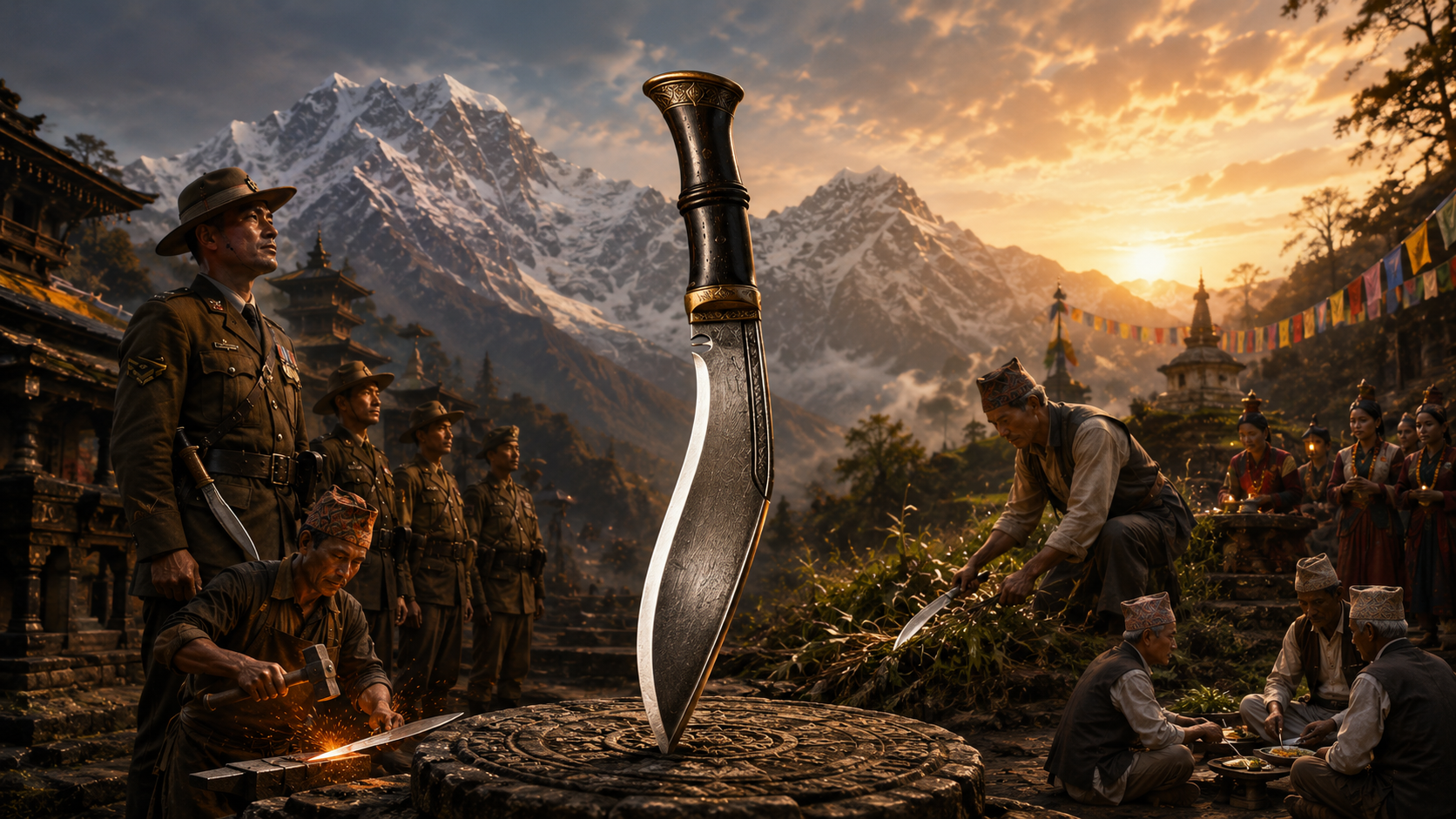
The Khukuri: What Nepal's Most Famous Symbol Actually Means
Ask someone what they know about the Khukuri and you'll get one of two answers.
"Isn't that the curved knife thing?" Or a blank look.
The Khukuri deserves better than that. It's one of the most layered symbols in the world — a weapon, a tool, a cultural artefact, and a statement of identity that has carried the same meaning for centuries.
Here's what you actually need to know.
What Is a Khukuri?
The Khukuri is a forward-curving blade originating in Nepal and the surrounding Himalayan region. Its defining characteristic is the inward curve — the blade bends toward the user rather than away, unlike most knives and swords.
This isn't decorative. The curve creates a mechanical advantage in cutting. The weight of the blade is distributed toward the tip, meaning a downward stroke carries more force than a straight blade of similar size would. It's engineered for efficiency.
The traditional Khukuri has a notch near the base of the blade called the cho — a small cutout whose exact purpose is debated. Some traditions hold it as a blood groove; others say it prevents blood from running onto the handle; still others attribute it with spiritual significance, representing the trident of Shiva or the footprint of a cow (a sacred animal in Hindu tradition).
What's not debated: the Khukuri is a complete tool. In the hands of a Gurkha soldier, it cleared jungle, built shelter, prepared food, and fought wars. It was never a decorative object.
The Khukuri and the Gurkhas
The association between the Khukuri and the Gurkha soldier is one of the most powerful weapon-identity bonds in military history.
From the Anglo-Nepalese War of 1814 onward, British accounts of Gurkha soldiers almost invariably mentioned the Khukuri. British commanders noted that Gurkha troops carried the blade not just as equipment, but as an extension of identity — the way a samurai carried a katana, the way a Scottish Highlander carried a dirk.
Over two centuries of Gurkha service in the British Army, the Khukuri's reputation grew. By both World Wars, it had become genuinely feared by opposing forces. Reports from the Burma campaign describe enemy soldiers unnerved not by firepower but by the knowledge that Gurkhas — and their Khukuris — were in the area.
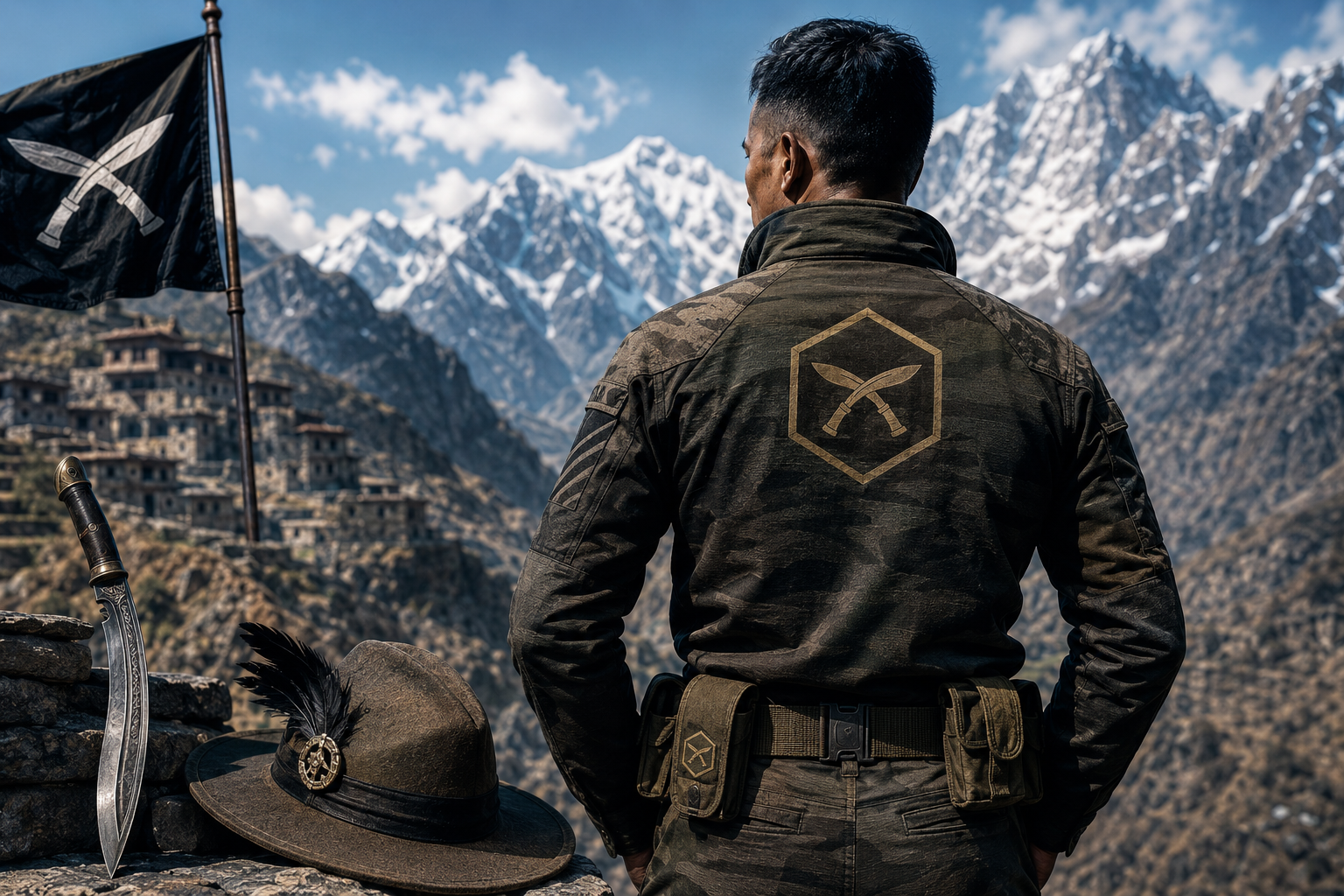
The Gurkha regiment's regimental insignia includes the Khukuri. The Royal Gurkha Rifles badge shows two crossed Khukuris. The weapon is inseparable from the identity.
The Cultural Dimension
Beyond military use, the Khukuri has deep roots in Nepalese culture.
In Nepal, the Khukuri is not primarily a weapon — it is a tool of daily life. Farmers use it. Hunters use it. It appears in festivals, in rites of passage, in household traditions. To receive a Khukuri as a gift is to receive something of genuine value, not just monetary but symbolic.
In Gurkha military tradition, the Khukuri carries specific protocol. A Gurkha soldier's personal Khukuri is not lent casually. Some traditions hold that once drawn in anger or combat, it cannot be sheathed without drawing blood — even if only the user's own.
This is not superstition. It's a commitment mechanism — a way of ensuring that the act of drawing the blade is taken seriously. The Khukuri as a symbol of the weight of action.
Why Being Gurkha Built a Brand Around It
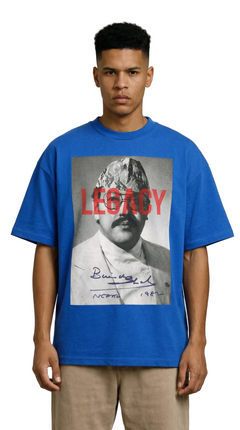
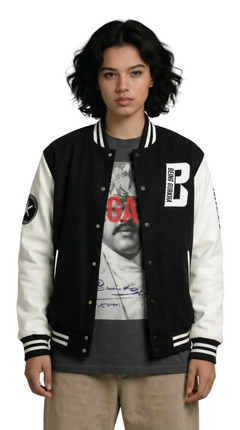
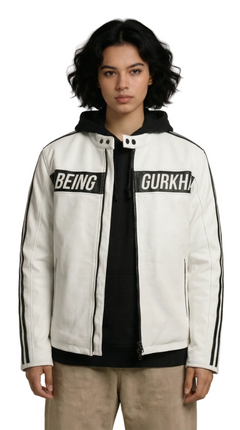
When we were designing Being Gurkha's visual identity, the Khukuri was always the centre.
Not because it looks striking (though it does). Because it carries the right weight.
The Khukuri represents everything we want Being Gurkha to embody: a tool that is also a symbol, a weapon that is also a cultural artefact, an identity marker that carries history without needing to announce it.
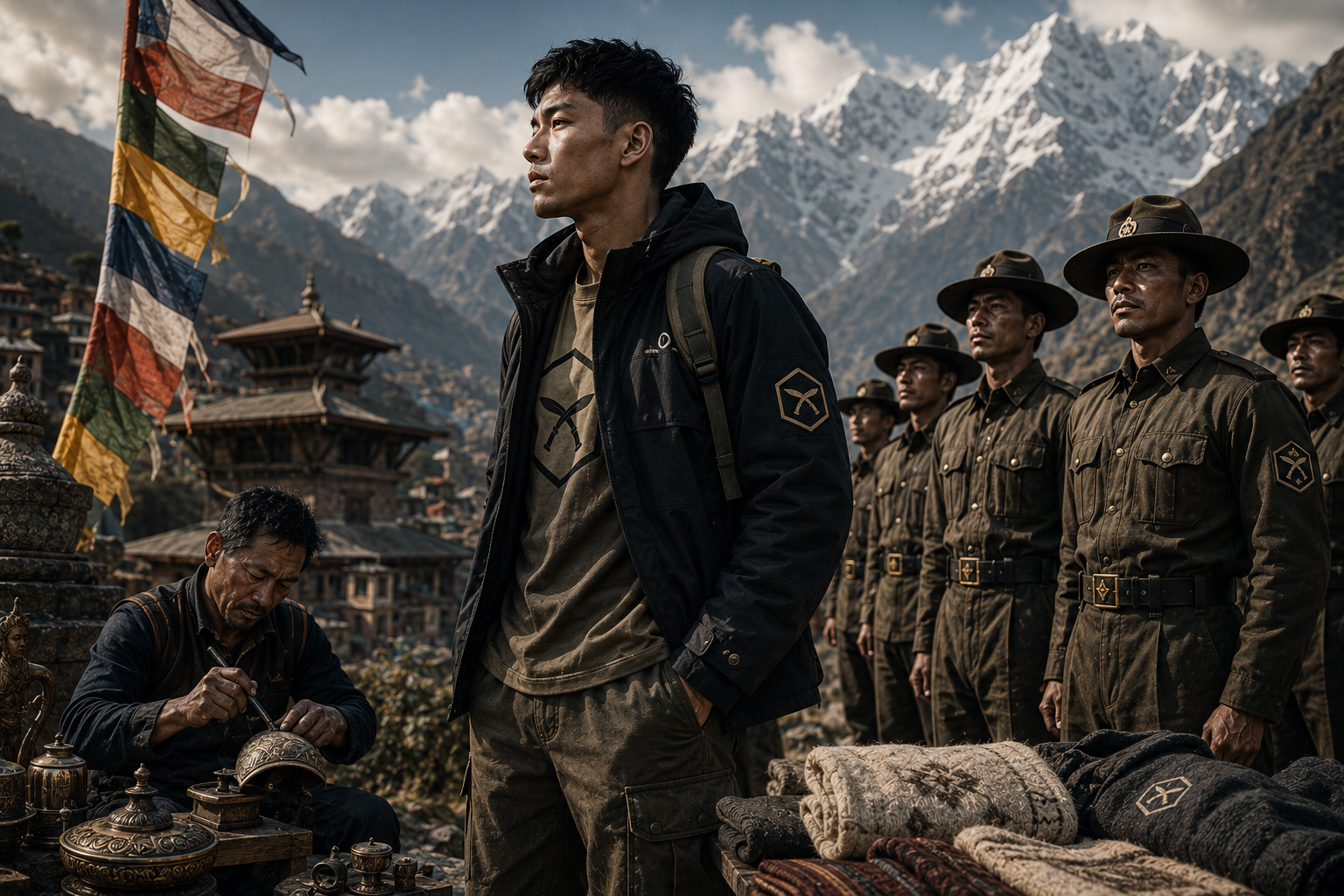
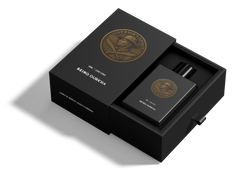
Our Khukuri icon sits inside a hexagonal frame — contained power, disciplined force. It appears across our products, our brand assets, and our community system. The Khukuri in the hexagon isn't decoration. It's a statement of what we're building: a brand with the same engineering logic as the blade itself.
Useful. Precise. Culturally grounded. Built to last.